Tracking Free Spin Multiplier Changes Through Successive Digital Reel Releases
Kirjoittanut Ines Perry · 25.8.2026

Tracking Free Spin Multiplier Changes Through Successive Digital Reel Releases
Software developers in the gambling sector have adjusted free spin multipliers with each new digital reel title, and these adjustments follow patterns visible across multiple release cycles from the same providers. Early implementations relied on static values that applied uniformly during bonus rounds, yet later versions introduced scaling mechanisms that responded to reel outcomes and player selections. Data from industry tracking services shows that between 2018 and 2024 the average starting multiplier in new releases rose from 2x to 5x in many series, while maximum values climbed from 10x to 25x or higher depending on the provider's design choices.
Early Patterns in Multiplier Design
Initial digital reel products featured free spin rounds where a single multiplier applied to all wins without variation, and this approach appeared consistently in titles released through the mid-2010s. Providers released updated versions of core engines that increased the base multiplier by one or two increments per iteration, creating a measurable progression across successive games. Observers note that these incremental shifts aligned with hardware improvements that allowed more complex random number generation without affecting game speed. Reports from the International Gaming Institute document how multiplier ranges expanded as reel counts grew from five to six or seven in updated releases.
Introduction of Variable and Progressive Systems
By the late 2010s several studios incorporated variable multipliers that changed based on consecutive wins during free spins, and this feature became standard in follow-up releases from the same development teams. Progressive elements emerged where the multiplier increased after each cascade or symbol combination, turning a fixed bonus into a layered system that rewarded longer sequences. Australian Gambling Research Centre data indicates that titles incorporating these mechanics saw higher engagement metrics in regulated markets during 2022 testing periods. Successive releases refined the triggers, moving from simple win-count thresholds to symbol-specific activations that altered multiplier growth rates.
Technological Influences on Recent Updates
Advances in rendering engines and server-side processing permitted more granular control over multiplier displays during free spin sequences, and developers applied these tools in 2023 through 2025 releases to create visual feedback that matched numerical changes. One common evolution involved splitting multipliers across reel sets so that different sections of the screen carried independent values, which then combined at the end of each spin. In August 2026 several providers launched titles that extended this split approach to include player-selectable modifiers at the start of bonus rounds, allowing adjustments within predefined ranges. These updates maintained compliance with regional technical standards while expanding the range of possible outcomes per session.
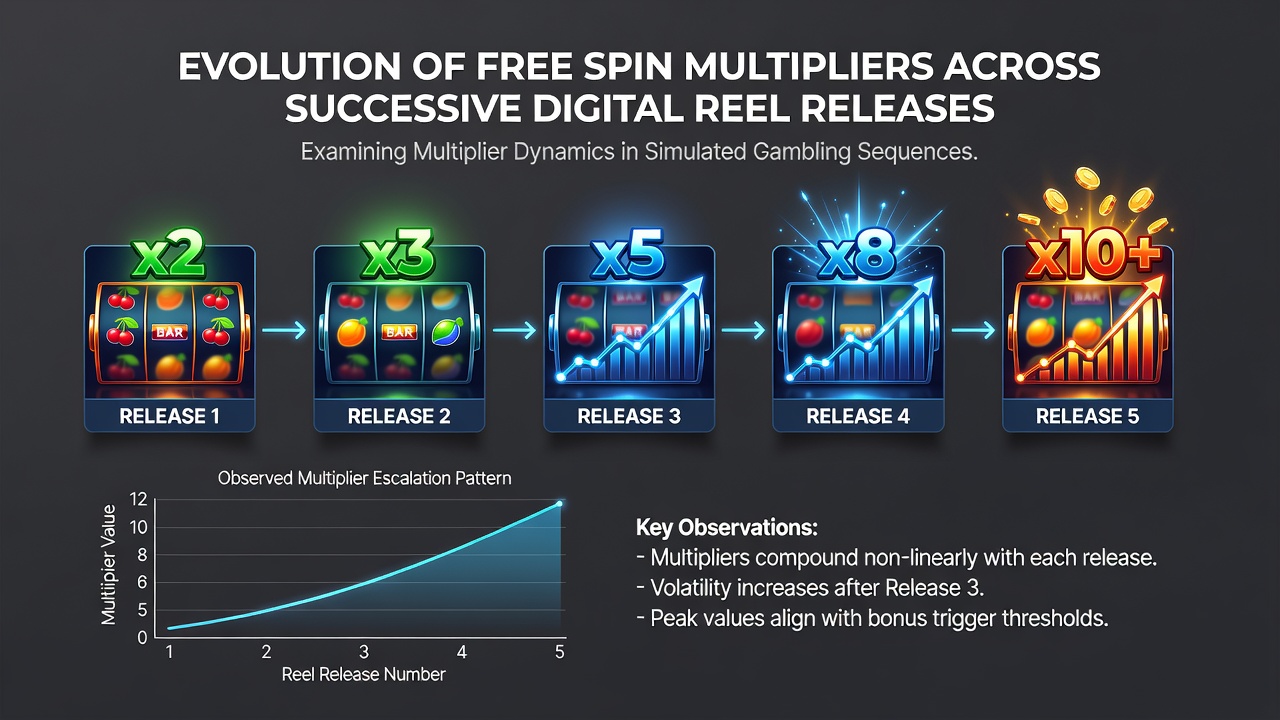
Research papers from academic groups studying gambling technology describe how these layered systems reduced the predictability of bonus results compared with earlier fixed models. The shift also coincided with the adoption of Megaways-style reel expansions, where the number of symbols per reel directly influenced the multiplier ceiling available in that round. Providers released iterative versions of the same engine that raised the symbol count limit and simultaneously adjusted multiplier formulas to keep return-to-player percentages within approved bands.
Regional Regulatory Effects on Implementation
Regulators in different jurisdictions have required documentation of multiplier algorithms before approving new releases, and this requirement has shaped how providers sequence updates across markets. Canadian provincial oversight bodies, for example, request detailed probability tables that show multiplier distribution across free spin outcomes, leading some studios to standardize progression curves in titles intended for those regions. European testing labs apply similar scrutiny to ensure that successive releases do not introduce unintended variance spikes. These reviews occur prior to launch and have contributed to more consistent multiplier scaling patterns visible in games distributed internationally.
Conclusion
Multiplier evolution in successive digital reel releases reflects a combination of technical capability, regulatory compliance, and engine refinement rather than isolated design choices. Patterns observed across multiple providers demonstrate steady increases in both starting values and maximum potential, alongside greater use of variable and split systems in later iterations. Figures from industry reports and academic sources confirm that these changes have appeared consistently between 2018 and the 2026 release window, with August 2026 launches continuing the established trajectory of added complexity within existing compliance frameworks. Continued monitoring of new titles will reveal whether further segmentation of multiplier application becomes the next standard step in the progression.